Why So Many Women Feel Wired But Exhausted

One of the most common things I hear from women in perimenopause is, “I’m exhausted all the time, but I still can’t fully relax.”
They’re physically tired, mentally drained, emotionally overwhelmed, and running on empty, yet their minds still feel like they are constantly going. Even when they finally sit down at the end of the day, their bodies don’t always feel calm. Instead, they feel overstimulated, anxious, emotionally reactive, restless, or like they can never fully exhale.
So many women have been operating in survival mode for so long that their nervous systems almost forget what true rest feels like.
And the hard part is that this has become incredibly normalized.
Women today are carrying so much. Careers, kids, relationships, aging parents, financial stress, endless notifications, packed schedules, emotional labor, decision fatigue, pressure to “do it all,” and constant mental stimulation from the moment we wake up until the moment we go to bed. Even when life looks relatively “fine” from the outside, many women are quietly functioning in a chronic state of stress underneath it all.
The body was never designed to stay in that state all the time.
What's Happening in Your Nervous System
This is where the nervous system and our stress hormones start playing a major role. When the body perceives stress, it activates what’s known as the stress response system, often referred to as the HPA axis. This system involves communication between the brain and adrenal glands and helps regulate cortisol, our primary stress hormone.
Cortisol itself is not bad. We actually need healthy cortisol levels to function properly. Cortisol helps regulate energy, blood sugar, inflammation, metabolism, focus, and our sleep wake cycle. In a healthy rhythm, cortisol rises in the morning to help us wake up and gradually lowers at night so the body can rest.
The problem is that many women are living with constant stress and very little true recovery.
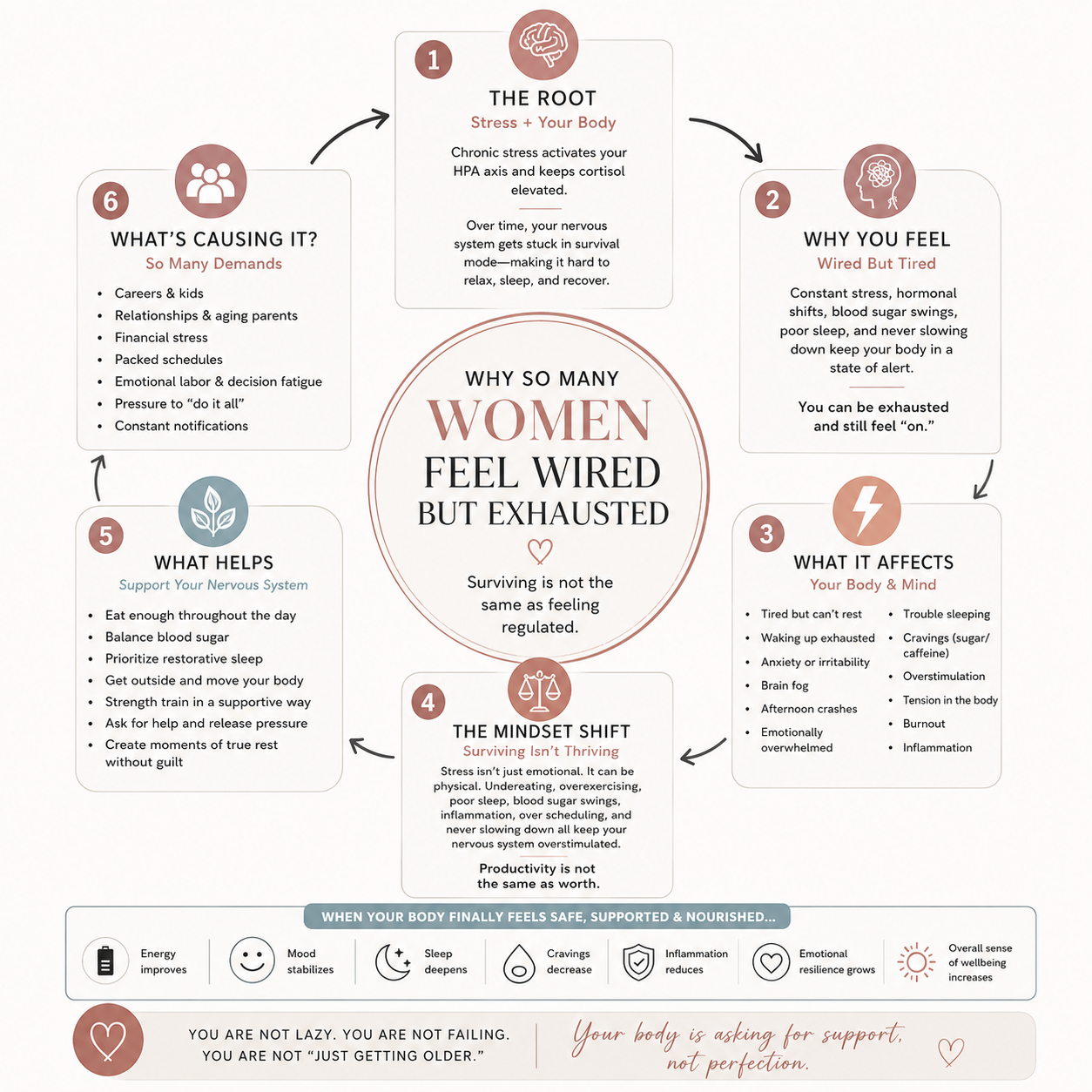
Over time, the body can become stuck in a state of chronic alertness where the nervous system no longer feels safe enough to fully relax. This is often when women begin experiencing symptoms like:
feeling tired but unable to rest
waking up exhausted
anxiety or irritability
afternoon crashes
feeling emotionally overwhelmed
trouble sleeping
cravings for sugar or caffeine
feeling overstimulated by noise, people, or responsibilities
tension in the body
burnout
And during perimenopause, this often feels even more intense because hormonal shifts can make the body more sensitive to stress in general.

What makes this especially difficult is that many women don’t even realize they are stressed because they have been functioning this way for years. They are still showing up for work, taking care of everyone else, managing the household, answering texts, making appointments, remembering schedules, and getting through the day, so they assume they are “fine.”
But surviving is not the same thing as feeling regulated.
One of the biggest mindset shifts I think women need during this stage of life is understanding that stress is not only emotional. Stress can also be physical. Under eating, over exercising, poor sleep, blood sugar swings, excessive caffeine, inflammation, over scheduling, and never slowing down can all keep the nervous system feeling unsafe and overstimulated.
This is why supporting the nervous system has become such an important part of hormone health conversations.
Healing does not always start with doing more. Sometimes it starts with slowing down enough for the body to finally feel supported.

How to Support Your Nervous System
For many women, nervous system support can look surprisingly simple:
eating enough throughout the day
getting enough sleep
reducing overstimulation
walking outside
strength training in a supportive way
spending less time in constant “go mode”
asking for help
creating moments of true rest without guilt
learning that productivity is not the same thing as worth
These things may sound simple, but they are powerful because they help signal safety to the body.
Our bodies are constantly responding to the environment we create for them. When the body finally starts feeling safe, supported, nourished, and rested, many women begin noticing improvements not only in their energy, but also in their mood, sleep, inflammation, cravings, emotional resilience, and overall sense of wellbeing.
If you’ve been feeling wired but exhausted lately, I hope this helps you understand that you are not lazy, failing, or “just getting older.” Your body may simply be asking for support in a world that asks far too much of women all the time.
And you are definitely not alone.
If this resonates with you, I'd love to help you feel supported again. Book a Free Discovery Call